
How Arrest Warrants Work in Clark County
Arkansas law lets a judge or magistrate sign an arrest warrant when sworn facts supply reasonable grounds, whether from personal knowledge or information given under oath. Clark County follows that pattern. An officer or prosecutor brings a complaint, affidavit, or information, and the judicial officer weighs it. The agency wanting the arrest never writes the warrant itself. The current Ninth East administrative plan assigns arrest-warrant duties under Rule 7.1 and Arkansas Code section 16-81-104. Circuit Court holds general jurisdiction over felonies, while the 40th District Court takes misdemeanors and preliminary felony matters within its authority. Whoever issued the order decides where the Clark County warrant record lives and who has power to change it.
Clark County's Sworn-Facts Review
Roles stay cleanly divided. Police supply the facts, a judge or magistrate decides whether the legal threshold is met, and a clerk records the signed process. In a circuit matter, the Clark County Circuit Clerk keeps the case file and readies court-authorized warrants for delivery to the sheriff.
- An officer or prosecutor presents a sworn complaint, affidavit, information, or factual basis.
- An authorized judicial officer reviews it for reasonable grounds or probable cause and decides whether to sign.
- The correct clerk records the order and coordinates delivery for service.
- An authorized peace officer executes the Clark County arrest warrant, after which the docket may record service, bond, release, or disposition.
The Circuit Clerk's official page covers court files and warrant preparation in Clark County.
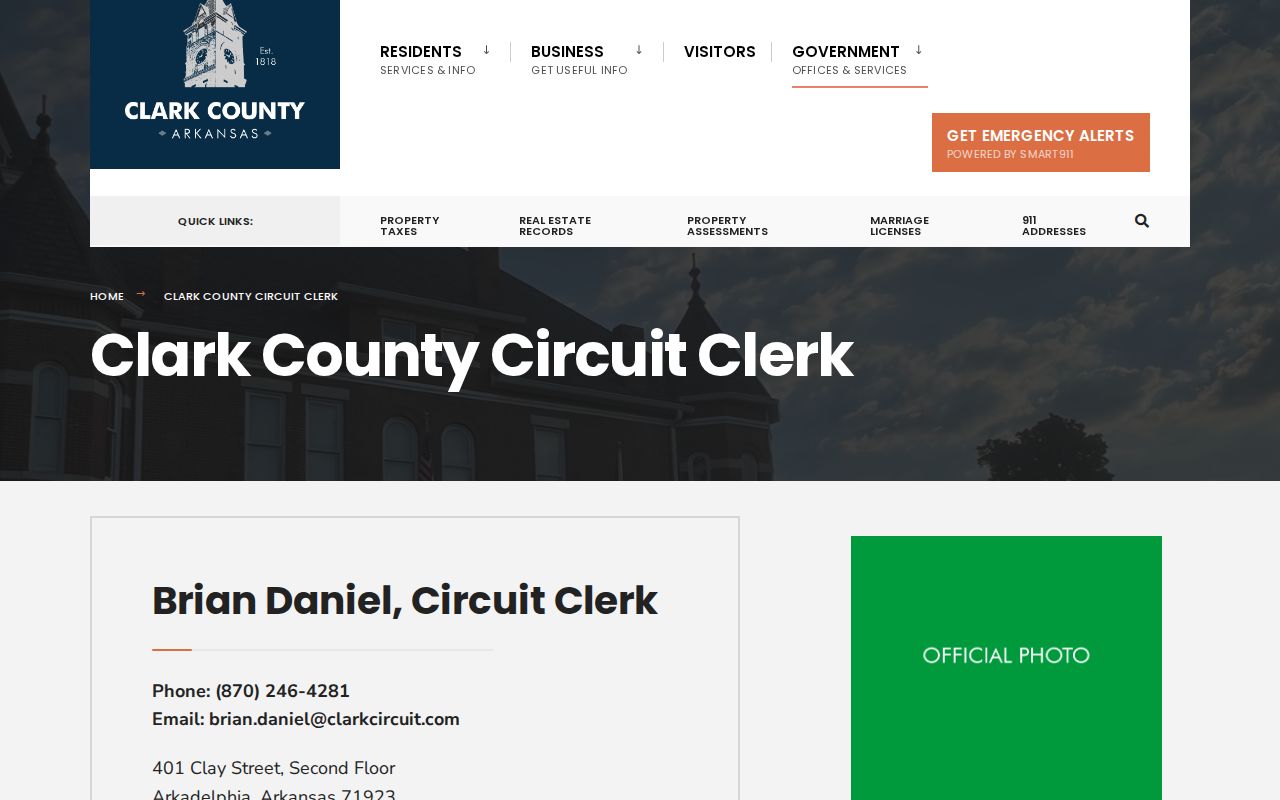
That official page shows circuit records and warrant preparation sit with the Circuit Clerk in Clark County, not the County Clerk.
Arrest Warrants: What They Contain
A public Clark County case view often lists a warrant as a docket event, not a stand-alone paper. Read the events in date order. An issuance entry alone proves nothing about current status once a later service, recall, or closure entry appears.
| Case and court | Case number, court or department, case type, and filing date identify the source file. |
|---|---|
| Supporting filing | A complaint, information, affidavit, or probable-cause document label may identify the sworn basis. |
| Warrant event | The docket may state arrest warrant issued and expose a warrant number. Clark County posts no guaranteed number format. |
| Charge details | The offense, statute, and felony or misdemeanor classification may appear when public. |
| Judicial action | The issuing judge or magistrate and issue date may be shown, subject to access limits. |
| Later status | Service, return, bond, release, next setting, recall, withdrawal, or closure changes how an older entry is read. |
Search ARCourts itself warns that public case data comes from filed documents. It is not guaranteed complete. A clerk or attorney should confirm what any Clark County arrest warrant entry means.
Clark County Arrest Warrant Checks
Clark County posts no official searchable arrest-warrant list. Begin with Search ARCourts, which pulls public cases by participant or case number, then call the office holding the file. For circuit and felony matters, the Circuit Clerk is at (870) 246-4281. The District Court clerk handles misdemeanors and preliminary matters at (870) 246-9552.
Clark County Circuit Clerk
401 Clay Street, Second Floor, Arkadelphia, Arkansas 71923
(870) 246-4281
Use for circuit files, docket entries, and circuit warrant-preparation records.
Clark County District Court
419 Clay Street, Arkadelphia, Arkansas 71923
(870) 246-9552
Use for misdemeanor and preliminary-felony matters in the 40th District.
Clark County Sheriff's Office
406 South 5th Street, Arkadelphia, Arkansas 71923
(870) 246-2222
Use for service, jail, booking, and surrender routing after identifying the case.
When a portal comes up empty, other routes remain. An Arkansas Freedom of Information Act request can reach releasable records held by the right office. ACIC and NCIC data stay restricted to criminal-justice use, not public lookup, and Search ARCourts is a case portal rather than a live statewide warrant registry. Note: A missing portal result never proves that no Clark County arrest warrant exists, especially when process is sealed or newly entered.
How Warrants Get Served in Clark County
After a judge signs an arrest warrant, the clerk records it and sends it out for execution. Arkansas law names sheriffs, police officers, constables, marshals, and other authorized peace officers as possible servers, and Clark County sources tie circuit warrants specifically to sheriff delivery. City police may serve process within their own lawful authority. The sheriff's main office is the practical Clark County contact for service and jail questions, though it publishes no separate warrant-unit line or active-warrant roster. Arkadelphia, Amity, Caddo Valley, and Gurdon each have local law-enforcement contacts, yet the issuing court always controls the legal order. Federal warrants run through a different court and enforcement chain, even when a federal task force works inside Clark County. The District Court criminal page sets out that court's jurisdiction and its warning about missed-court warrants.
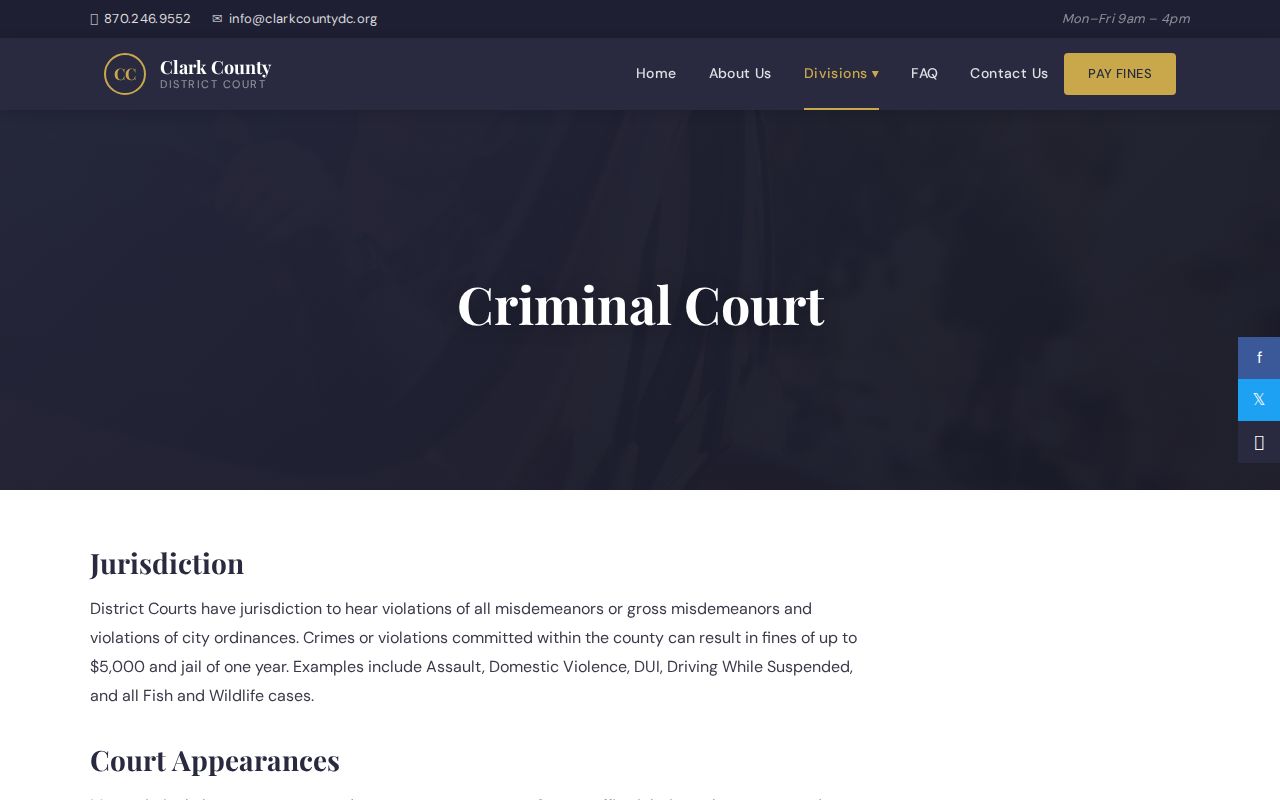
That official court page helps separate District Court bench process from the probable-cause route for a new Clark County arrest warrant. Service brings booking next. First appearance, release, bond, counsel, and notice procedures follow as they apply. The Ninth East plan lists these functions without setting any universal local timing rule, so no one can promise a fixed release time, a set bond, or an automatic same-day hearing.
Clark County Service Roles
One Clark County arrest warrant can pass through several offices, and each answers a different question. The court decides whether process issues. The clerk explains the public file and routine procedure. The sheriff or police covers service and custody logistics. Only the issuing court can recall, withdraw, or otherwise change a warrant.
| Office | Role | Best Question |
|---|---|---|
| Circuit Court and Circuit Clerk | Felony issuance and file | What later docket event follows issuance? |
| 40th District Court | Misdemeanor and preliminary-felony process | Which department and case number control? |
| Sheriff or city police | Authorized service and custody | What service or surrender procedure applies? |
Knowing the roles saves wasted calls in Clark County. Do not ask the sheriff to change a judge's order or a clerk for legal advice; clerks explain procedure and hand over records, while counsel advises on strategy.
Arrest Warrants, Summonses, and Bench Warrants
These kinds of process can all arise in a Clark County criminal case. They do not mean the same thing. Where each one started, and what it does, tell you which record to read and which office to call.
| Process | Why It Arises | Immediate Effect |
|---|---|---|
| Arrest warrant | A judge or magistrate finds reasonable grounds or probable cause from sworn facts. | Authorizes an officer to take the named person into custody. |
| Summons | The court directs a person to appear without first ordering custody. | Creates a duty to appear at the stated place and time. |
| Bench or FTA warrant | A person misses a required setting or fails to comply with a court obligation. | Authorizes arrest so court process can resume and may accompany an FTA charge. |
Clark County District Court states plainly that missing a scheduled date triggers a bench warrant. A new arrest warrant is different. It takes the sworn-facts route before a judge. One case can hold both kinds of process at once, so the label on the paper and the order of events decide what you are actually facing.
Sealed Clark County Arrest Process
Not everything sits in public view. A sealed warrant, sealed indictment, juvenile matter, or protected filing can stay outside the ordinary case record even when an arrest warrant exists in a public file. Clark County juvenile files are confidential. Arkansas court-access rules also shield identifiers and anything law, rule, or court order makes confidential.
- Issued
- The court signed and entered process; a later event may change its status.
- Served
- An officer executed the warrant and a service or return event was recorded.
- Recalled
- The issuing court withdrew the warrant. Obtain the entry or signed order and confirm the operational update.
- Withdrawn
- The court or agency removed process; the docket controls the precise effect.
- Sealed
- Public access is withheld under law or court order, often until disclosure is authorized.
Portal silence proves nothing. A blank Search ARCourts result cannot show that sealed process is absent. If you are worried about your own Clark County status, rely on counsel and the issuing clerk rather than a conclusion drawn from an empty search.
Handling an Arrest Warrant in Your Name
Start with the paperwork. Confirm the issuing court, the case number, the warrant event, and any later service or recall entry. Then talk with an attorney about the safest lawful response, whether that means a judge appearance, a planned surrender, a bond arrangement, or a motion to recall or quash. None of those is automatic. No official Clark County page promises walk-through surrender or same-day release.
- Use the public docket as a start, then verify the current event with the Circuit Clerk or District Court clerk.
- Ask counsel whether to contact the issuing court before appearing and whether recall, first appearance, or bond can be addressed.
- If surrender is directed, call the sheriff at (870) 246-2222 and ask about place, identification, medication, and property rules.
- After court action, obtain the entry or order showing service, recall, withdrawal, or another outcome, then confirm the system update.
Important: Speak with a lawyer before surrendering; a Clark County arrest warrant can lead to custody during law-enforcement contact.
Clark County publishes no public bond schedule, recall form, surrender window, or amnesty program. When possible jail is tied to a charge and counsel is out of reach, ask about the affidavit-of-indigency review in the District Court FAQ. For a fuller route, see the Clark County warrant records home page.
Clark County Status Confirmation
The last step is documentary. Keep the case number. Get the later docket entry or signed order that shows what actually happened, because a payment receipt, an oral assurance, or vanishing from public search may not prove an arrest warrant was recalled. Ask the clerk when the docket and the sheriff operational system should both reflect the change. If the Clark County warrant was served, the case can continue through bond, counsel, a next setting, and disposition. If it was recalled or withdrawn, the exact order is what counts. When the result stays murky, have counsel compare the public docket against the issuing court file, especially where similar names, several departments, or a sealed filing could invite a wrong inference. The public route in Clark County is layered by design. Search ARCourts is for discovery. The right clerk holds the filed record. The sheriff handles service or custody. That division of authority is real, and working with it gives you a sound basis for dealing with your own court matter.